
Exchanges are often treated as a post-delivery problem, managed reactively through support tickets and manual workflows. In reality, most exchange complexity is created much earlier — at the moment of checkout.
When authorisation rules are unclear, inventory is not intelligently gated, or payment capture is poorly timed, exchanges begin to leak value through delayed fulfilment, inventory misallocation, and customer frustration.
Handling exchanges at checkout: authorisation, capture and inventory gating patterns examines how D2C brands can shift exchange management upstream into checkout itself. By designing explicit authorisation flows, conditional payment capture, and inventory gating logic at order creation, teams can prevent downstream chaos before it starts.
The result is faster exchange fulfilment, lower support load, cleaner inventory accounting, and tighter cashflow control. For brands operating at scale — especially with high return or size-variance categories — treating exchanges as a first-class checkout concern is no longer optional; it is a prerequisite for sustainable operations.
Why do exchanges break down when handled post-delivery?
Understanding where operational debt actually originates
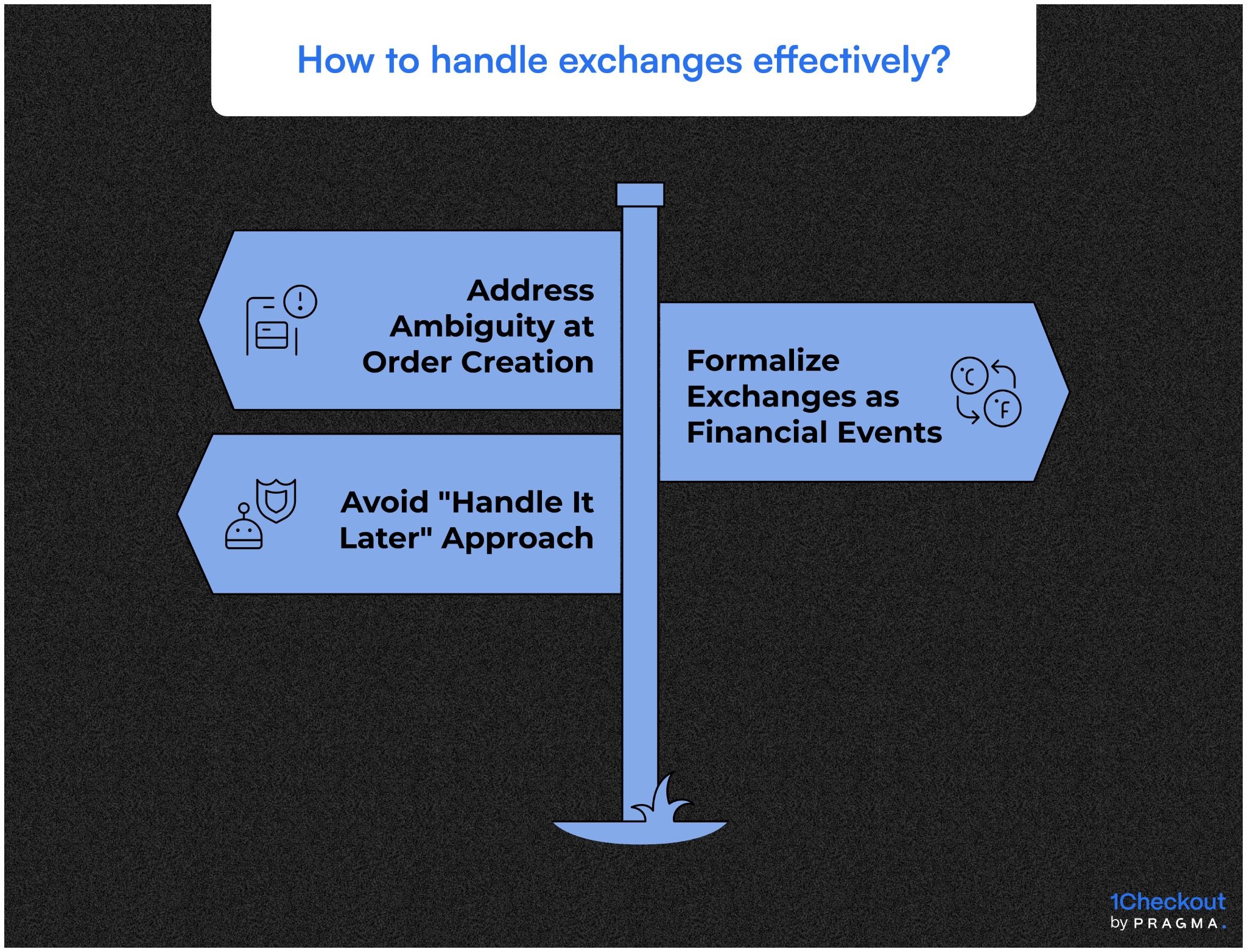
Most exchange failures are not caused by reverse logistics or courier delays. They are caused by ambiguity at order creation. When the system does not clearly define what can be exchanged, when inventory should be reserved, or how payment adjustments will be handled, every downstream team is forced to improvise.
This improvisation shows up as:
- Manual approvals by CX agents
- Inventory double-booking
- Delayed fulfilment of exchange orders
- Refunds issued simply because exchange execution failed
Treating exchanges as an afterthought pushes complexity downstream, where it is costlier and harder to control.
Exchanges are financial events, not just logistics events
An exchange alters revenue recognition, inventory ownership, and fulfilment priority. When these changes are not formalised at checkout, finance, ops, and CX operate on different versions of truth.
Why “we’ll handle it later” always backfires at scale
At low volumes, manual fixes hide system gaps. At scale, these gaps multiply into SLA breaches, inventory shrinkage, and customer dissatisfaction that is hard to reverse.
How should exchange authorisation be designed at checkout?
Defining eligibility before the order is placed
Exchange authorisation determines whether an order is eligible for exchange and under what conditions. This logic must be explicit, rule-driven, and visible to both customers and internal teams.
At checkout, brands should pre-define:
- Which SKUs are exchangeable
- Allowed exchange reasons (size, variant, defect, preference)
- Time windows for initiating an exchange
- Category-specific constraints
SKU- and category-level authorisation logic
Not all products behave the same. Apparel supports size exchanges easily, while electronics or personal care often should not. Authorisation logic should reflect this reality instead of enforcing blanket policies.
Making authorisation transparent to customers
When exchange rules are shown clearly at checkout, customers self-select appropriately. This reduces post-delivery disputes and CX escalations because expectations are set upfront.
When should payment be authorised versus captured for exchange-prone orders?
Balancing customer trust with cashflow discipline
Payment handling is one of the most sensitive aspects of exchange design. Capturing funds too early can frustrate customers during exchanges, while delaying capture increases financial risk.
Authorise-first, capture-later models
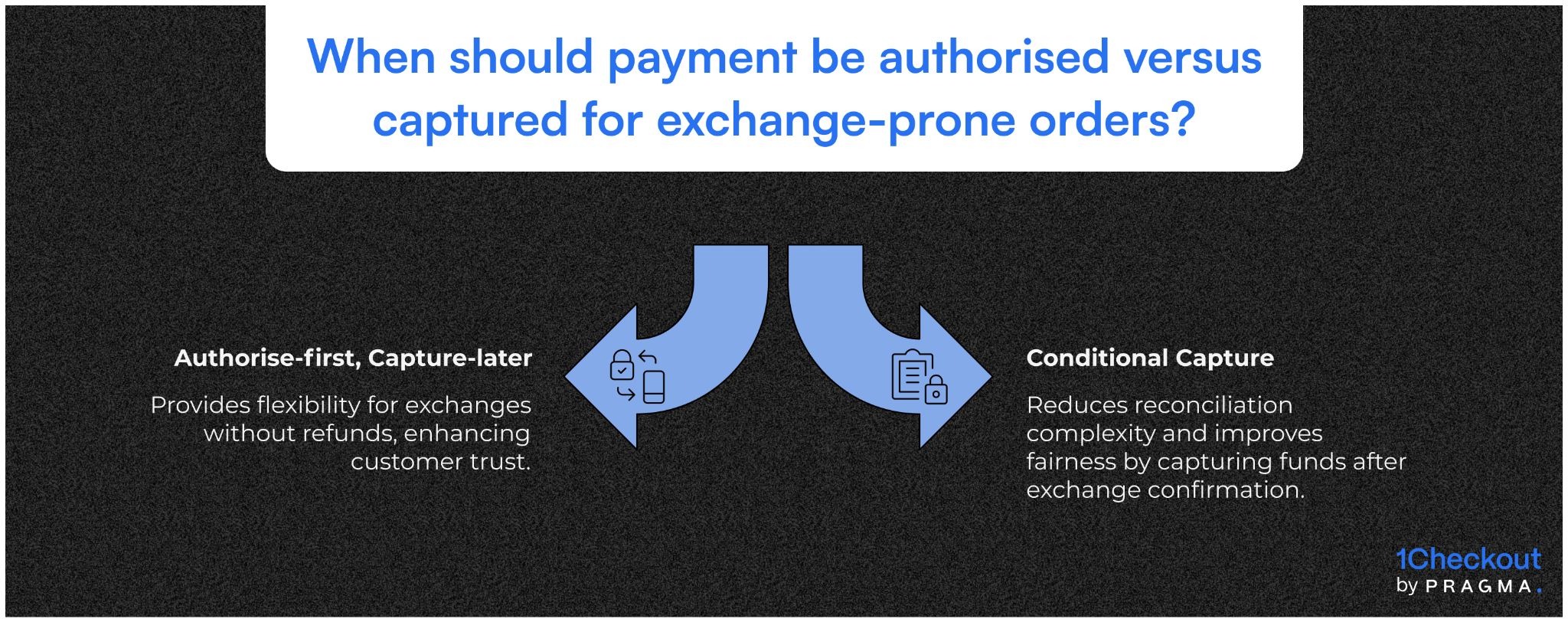
For exchange-heavy categories, authorising payment at checkout and capturing upon successful fulfilment provides flexibility. It allows brands to adjust amounts seamlessly when an exchange occurs without issuing refunds.
Conditional capture based on exchange outcomes
Advanced systems delay final capture until:
- The exchanged SKU is confirmed
- Inventory is allocated
- Fulfilment is triggered
This reduces reconciliation complexity and improves customer perception of fairness.
How does inventory gating prevent exchange-induced stockouts?
Protecting availability while exchanges are in motion
Inventory gating ensures that stock intended for exchanges is not oversold through fresh orders. Without it, brands face a classic conflict between forward sales and reverse demand.
Soft locks vs hard locks
Soft locks reserve inventory probabilistically, while hard locks fully block units. The choice depends on:
- SKU velocity
- Exchange probability
- Lead time for replenishment
Exchange-priority allocation rules
Some brands prioritise exchanges over new sales for certain SKUs to protect customer experience. This decision must be encoded explicitly, not left to manual judgement.
What checkout patterns reduce friction during exchange selection?
Designing flows that set the right expectations
Checkout UX plays a critical role in exchange success. Poorly designed flows hide constraints and create friction later.
Pre-selecting exchange intent
For categories with high exchange likelihood, asking customers upfront whether they prefer exchange or refund sets operational expectations early.
Variant-aware checkout messaging
Surfacing size charts, fit notes, and exchange availability reduces unnecessary returns by aligning choice with reality.
How should OMS and inventory systems stay in sync during exchanges?
Avoiding reconciliation chaos
Exchange flows touch multiple systems simultaneously. Without tight synchronisation, mismatches arise.
Event-driven exchange workflows
OMS should emit explicit exchange events that trigger inventory reservation, payment adjustment, and fulfilment workflows in real time.
Preventing ghost inventory
Every exchange must either consume inventory or release it deterministically. Ambiguity leads to phantom stock and fulfilment failures.
How should exchange pricing differentials be handled at checkout?
Managing upsells, downsells, and margin leakage
One of the most overlooked aspects of exchange design is price variance. When customers exchange for a higher- or lower-priced SKU, systems that are not exchange-aware at checkout default to refunds or manual adjustments. This creates reconciliation delays and customer confusion.
A robust exchange flow must anticipate price differentials upfront. Checkout systems should clearly define how deltas will be handled — whether through additional payment capture, wallet credits, or partial refunds. Without this clarity, CX teams are forced into one-off decisions that erode margin consistency and slow resolution.
Upsell-aware exchange logic
For higher-priced exchanges, pre-authorised payment buffers or one-click delta capture reduce friction. Customers are more willing to pay small differences when the process is transparent and immediate.
Preventing silent margin loss on downsells
Downsell exchanges should automatically convert price differences into wallet credits or future-use balances instead of cash refunds, preserving cashflow and increasing repeat purchase probability.
What role should customer history play in exchange eligibility at checkout?
Using behaviour to prevent abuse without harming trust
Treating all customers equally during exchanges is operationally simple but financially risky. Repeat exchangers, chronic returners, and high-friction customers behave very differently from loyal buyers — and checkout logic should reflect this.
By integrating customer history into exchange authorisation, brands can selectively tighten or relax rules. This ensures genuine customers experience flexibility while risky behaviour is contained early.
Behaviour-weighted exchange permissions
Signals such as past exchange frequency, refund abuse, or delivery refusal history can dynamically influence:
- Allowed exchange windows
- Payment capture timing
- Inventory reservation priority
Designing invisible friction instead of hard denial
Rather than blocking exchanges outright, risky profiles can be nudged towards refunds or delayed fulfilment, reducing abuse without triggering confrontation.
How can checkout flows reduce exchange-induced fulfilment delays?
Synchronising customer intent with warehouse execution
Even well-authorised exchanges fail if fulfilment teams are not prepared for them. Delays often occur because warehouses treat exchange orders as secondary or ambiguous.
Checkout flows should clearly label exchange intent and expected timelines so fulfilment systems can prioritise appropriately. This reduces queue confusion and accelerates turnaround.
Exchange-aware order tagging
Orders flagged as “exchange pending” or “exchange confirmed” allow warehouses to sequence picking, packing, and dispatch intelligently instead of reacting late.
Reducing handoff delays between reverse and forward logistics
Tightly coupling return receipt confirmation with exchange fulfilment triggers shortens cycle time and prevents customer drop-off.
What failure modes should checkout teams design against?
Planning for what breaks, not just what works
Every exchange system will face edge cases. Designing for failure upfront prevents cascading operational issues later.
Common failure modes include:
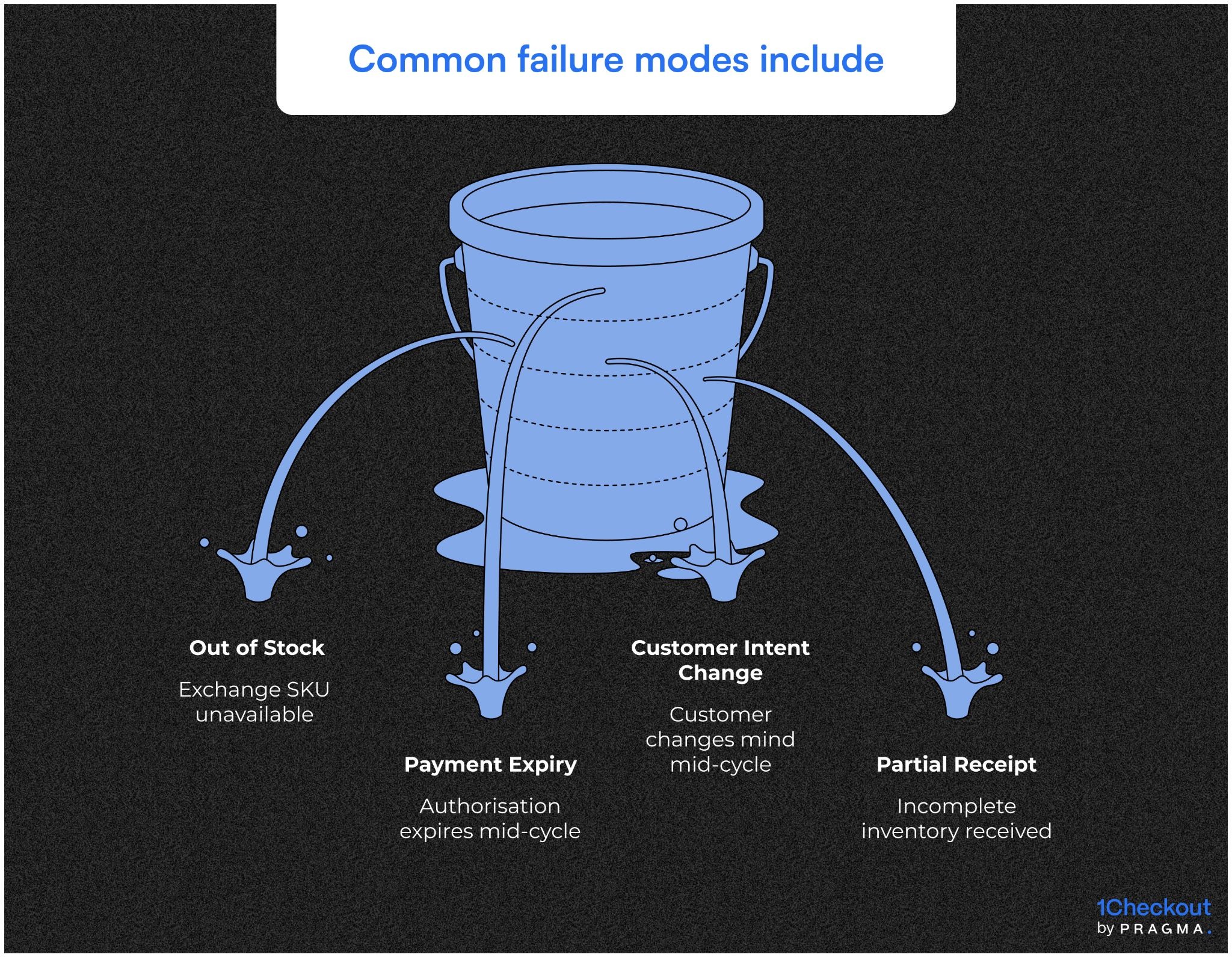
- Exchange SKU going out of stock mid-process
- Payment authorisation expiry
- Customer changing intent mid-cycle
- Partial inventory receipt during reverse logistics
Fallback decision trees
Checkout logic should define default actions for each failure scenario — refund, alternate SKU offer, delayed fulfilment, or credit issuance — without manual escalation.
Communicating failure outcomes clearly
Customers tolerate failure better when outcomes are predictable and explained early. Silence or ambiguity is what drives escalation.
What operational metrics reveal exchange health early?
Measuring what actually matters
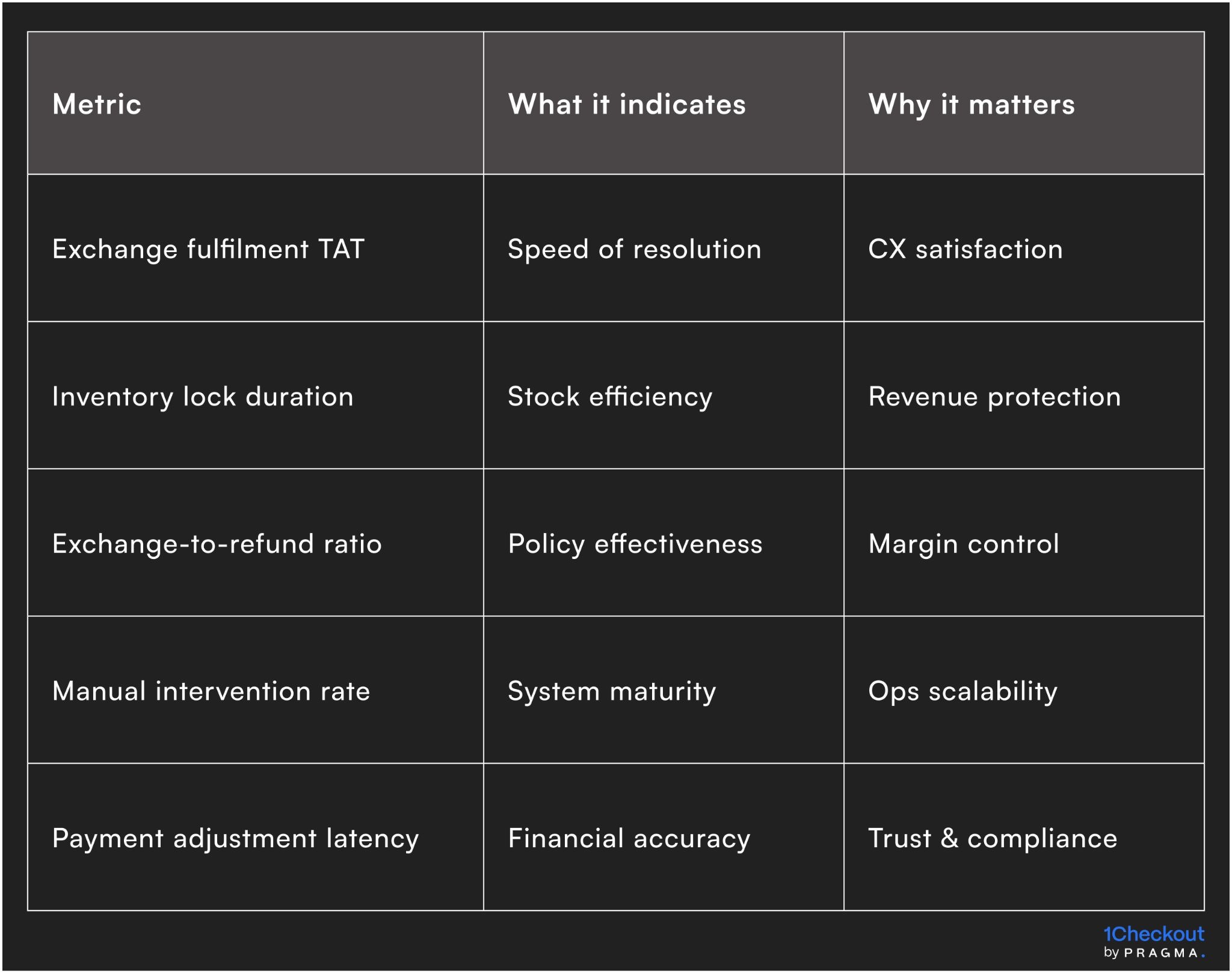
Tracking these metrics weekly helps teams correct issues before they become systemic.
Quick Wins from handling exchanges at checkout
Practical steps to stabilise exchange execution immediately
Week 1: Make exchange rules explicit at checkout
Audit your top 20 SKUs by return and exchange volume. For each, define whether exchanges are allowed, under what reasons, and within what time window. Surface these rules clearly at checkout and in order confirmation communication.
This single step reduces post-delivery disputes and prevents CX teams from improvising policy under pressure.
Expected result: Fewer ambiguous exchange requests and cleaner customer expectations.
Week 2: Introduce conditional payment capture for exchange-prone categories
Shift from immediate capture to authorisation-first models for categories with high size or variant exchanges. Configure conditional capture to trigger only after exchange fulfilment is confirmed.
This limits unnecessary refunds and simplifies reconciliation.
Expected result: Lower refund volumes and improved cashflow predictability.
Week 3: Gate inventory explicitly for exchange demand
Identify SKUs where exchange likelihood exceeds a defined threshold. Apply soft or hard inventory locks for these SKUs to protect availability for pending exchanges.
This prevents situations where exchanges fail simply because stock was consumed by new orders.
Expected result: Faster exchange fulfilment and fewer forced refunds.
Week 4: Instrument exchange health metrics
Start tracking exchange-specific metrics weekly:
- Exchange fulfilment TAT
- Inventory lock duration
- Manual intervention rate
- Exchange-to-refund ratio
Use these metrics to identify breakdowns before customers escalate.
Expected result: Early visibility into operational debt and faster corrective action.
To Wrap It Up
Exchanges fail not because customers change their minds, but because systems are not designed to handle change gracefully. By shifting exchange logic into checkout — through clear authorisation, disciplined payment capture, and intelligent inventory gating — brands eliminate downstream chaos before it starts.
This week, audit your exchange rules and make them explicit at checkout for your top exchange-heavy SKUs.
Over time, continuously refining these controls turns exchanges from a cost centre into a predictable, trust-building operational capability.
For D2C brands seeking tighter control over exchange execution, Pragma’s orchestration platform provides exchange-aware checkout logic, conditional payment workflows, and inventory gating that help brands reduce forced refunds by up to 25% while accelerating exchange fulfilment cycles.
.gif)
FAQs (Frequently Asked Questions On Handling exchanges at checkout: authorisation, capture and inventory gating patterns)
1. Should exchanges always be preferred over refunds?
No. Exchanges make sense only when inventory availability, margin, and fulfilment speed can be protected.
2. Do authorisation-first payment models confuse customers?
No, when communicated clearly. They often improve trust by avoiding unnecessary refunds and recharges.
3. Is inventory gating necessary for all SKUs?
No. It should be applied selectively to high-exchange, high-velocity items.
4. Can exchange abuse be controlled without hard denial?
Yes. Behaviour-weighted rules and invisible friction are more effective than outright blocking.
5. When should an exchange be converted to a refund automatically?
When inventory constraints or delays exceed predefined SLA thresholds



.svg)
.svg)